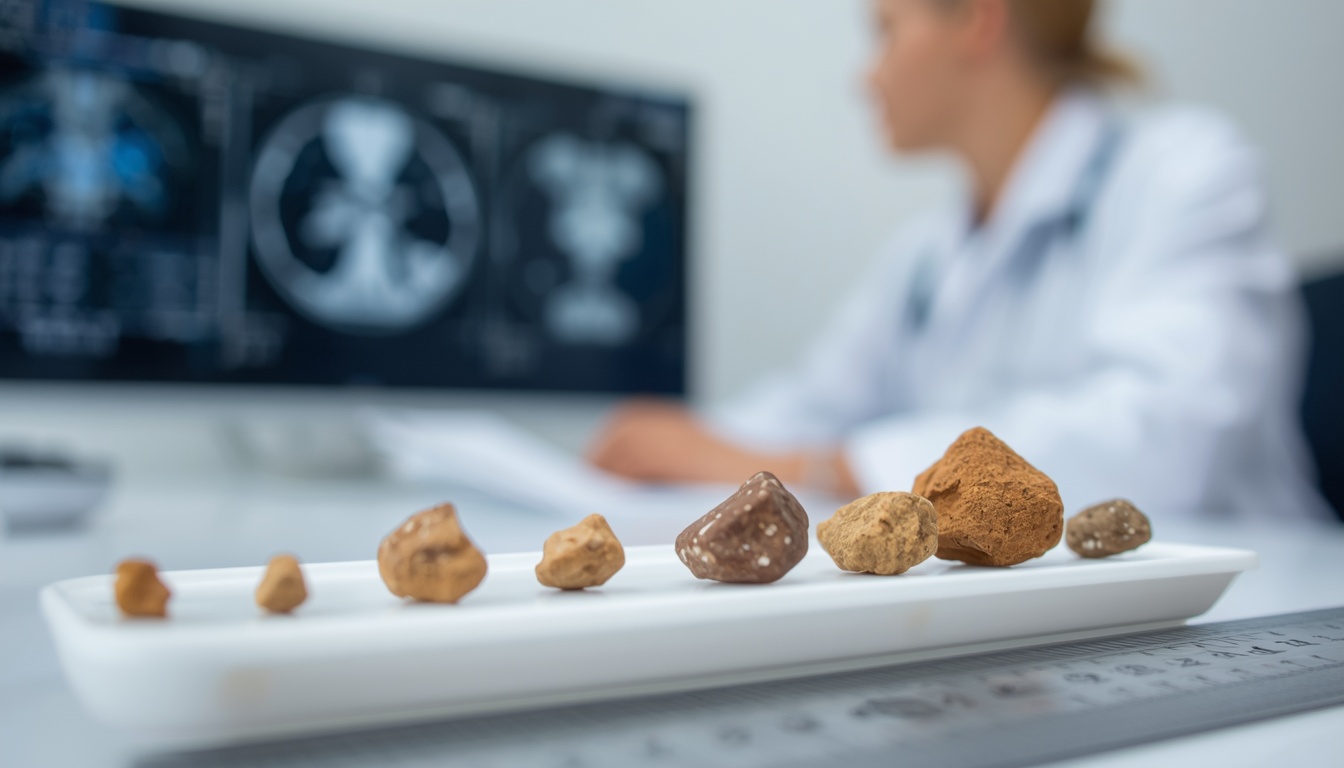
Urology sits between clinic medicine and surgery. In the same day, a urologist may counsel a man about his PSA trend, review a flow rate and post-void residual, perform a cystoscopy, and operate on a kidney stone. The data are numeric, longitudinal, and often decisive: a rising PSA velocity, a Gleason score, a stone that keeps recurring, a catheter that must come out on schedule. Urology EMR software stores these as structured fields so that trends are visible and decisions are backed by data, not by rereading old notes.
This guide is written for urology practice owners, hospital urology departments, and administrators evaluating the best urology EMR. It covers the workflows to require, how specialty and general options compare, pricing, and how to plan a rollout.
Why General EHRs Struggle With Urology
- Symptom scores vanish into notes. IPSS and similar instruments are repeated over years, but only trend if the score, date, and instrument are stored as data.
- PSA needs context. PSA value, velocity, digital rectal exam findings, and prostate volume belong together to make sense of risk.
- Stone disease is a recurrence story. Each episode has a composition, size, and treatment, and prevention depends on seeing the whole history.
- Catheters are easy to forget. Insertion date, planned removal date, and trial without catheter outcomes are safety-critical, since prolonged catheterization raises infection risk.
- Biopsy data is granular. Number of cores, positive cores, Gleason score, and whether the biopsy was imaging-targeted feed directly into treatment planning.
Core Workflows a Urology EMR Must Support
1. Clinical Assessment With Symptom Scores, Urodynamics, and Prostate Screening
The assessment record captures chief complaint and history, symptom scores with instrument, score, and date, and an impression and plan. Urodynamics fields include whether testing was performed, maximum flow rate in mL per second, post-void residual, bladder capacity, detrusor overactivity, and findings. Prostate screening fields include PSA in ng/mL, PSA velocity, digital rectal exam findings, and prostate volume in cc. Because each is a field, a clinician can see a PSA trend and IPSS change in seconds.
2. Diagnostic Procedures
Diagnostic procedure records cover cystoscopy, renal and bladder ultrasound, prostate biopsy, renal biopsy, CT urogram, retrograde pyelogram, and urodynamic studies. Each stores the clinical indication, findings, an impression, a critical-result flag, the performing clinician, and attachments. Biopsy detail adds the number of cores, Gleason score, positive cores, and whether the biopsy was imaging-targeted, which is essential now that MRI-targeted biopsy is common. For the pathology side, see our guide to anatomic pathology software.
3. Disease Management: BPH, Prostate and Bladder Cancer, Stones, Incontinence, and More
Enrollment supports BPH, prostate cancer, bladder cancer, kidney cancer, kidney stones, urinary incontinence, erectile dysfunction, male infertility, and recurrent UTI. Each enrollment tracks control status, current therapies, goals, and a care plan, and the record also carries a surveillance schedule (interval in months, last imaging, next due). For stone patients, the stone history records each episode's date, composition, size in mm, treatment, and whether the stone passed. That history is what allows a clinician to look at recurrence honestly and to consider metabolic evaluation and prevention.
4. Surgical Services and Catheter Care
Surgical case records capture procedure name, approach (open, laparoscopic, robotic, endoscopic, or percutaneous), indication, laterality, pre-operative plan, operative findings, procedure detail, estimated blood loss, complications, and the surgeon's signature. Catheter care records the catheter type, insertion date, planned removal date, removal date, and whether a trial without catheter passed. Documenting a planned removal date is a small feature with real patient-safety value. For the wider surgical pathway, see our guide to general surgery software.
5. Analytics: Stone Recurrence and Activity
Urology analytics include stone recurrence (number of stone patients, total episodes, recurrent patients, and recurrence rate), along with activity trends by month and status breakdowns. Stone recurrence is a meaningful quality indicator because it tells the department whether prevention counseling is working.
6. AI Assist for Urology Documentation
Quecorex Urology includes an AI Assist feature. A clinician can dictate, upload a document, or paste a note, and the system produces a structured draft. The clinician reviews it before anything is saved, and approved values prefill only empty fields, never overwriting what the clinician has typed. This speeds up data entry for high-volume clinics while keeping a human in control. Read more about the broader approach in our guide to ambient clinical documentation.
Urology EMR Comparison: Urology-Specific EHRs, General EHRs, and Quecorex
| Criteria | Urology-specific EHR | General ambulatory or enterprise EHR | Quecorex Urology module |
|---|---|---|---|
| Best fit | Independent urology groups | Multi-specialty groups and large systems | Hospitals and clinics wanting urology inside the hospital record |
| Symptom scores and PSA | Strong | Templates | Scores over time, PSA, PSA velocity, DRE, prostate volume |
| Biopsy and urodynamics | Strong | Varies | Cores, Gleason score, targeted flag, flow rate, PVR, capacity |
| Stone history and recurrence | Varies | Usually free text | Per-episode history and recurrence analytics |
| Catheter care tracking | Varies | Inpatient flowsheets | Type, insertion, planned removal, trial without catheter |
| Hospital and OR integration | Interfaces required | Native | Native with surgery, anesthesia, pathology, and billing |
Urology-focused products such as ModMed Urology and UroChart serve many independent groups, general ambulatory EHRs such as NextGen offer urology templates, and the AUA Quality Registry (AQUA) collects urology quality data from participating practices. If your urologists operate in a hospital and need OR, anesthesia, pathology, and inpatient connected, an integrated module reduces interface work. Product names belong to their respective owners and this comparison reflects general positioning, so verify capabilities directly with each vendor. See also our EHR platform comparison.
Buyer's Checklist: Choosing the Best Urology EMR
- Are symptom scores stored with instrument and date so they trend?
- Can PSA, velocity, DRE findings, and prostate volume be viewed together?
- Does biopsy detail include cores, positive cores, Gleason score, and imaging-targeted status?
- Is there a per-episode stone history and a recurrence report?
- Can you track catheter insertion, planned removal, and trial without catheter?
- Do surgical case records capture approach, laterality, blood loss, and complications?
- Is there a surveillance schedule with next due dates for cancer and stone patients?
- Does it support standard exchange with laboratory and radiology?
Pricing and Total Cost of Ownership
Urology-specific EHRs are typically priced per provider per month, and hospital platforms are quoted per module or per bed. Ask every vendor to price the same scenario: number of urologists, sites, cystoscopy and surgical volume, urodynamics equipment interfaces, and imaging or pathology connections. Include migration, training, and parallel-running costs. Quecorex licenses urology as a specialty bundle of sub-modules on the core hospital platform.
Want a urology software quote? Request Quecorex urology pricing or book a demo built around your service.
Implementation Timeline
Start with clinical assessment, since IPSS and PSA capture provides immediate value (weeks 1-3). Add diagnostic procedures with biopsy and urodynamics (weeks 4-5), then disease management and surveillance schedules (weeks 6-7), and surgical services with catheter care and analytics (weeks 8-10). Our EMR implementation guide covers training and go-live planning.
Metrics Urology Departments Should Track
- Stone recurrence rate and recurrent patients
- PSA follow-up completion after abnormal results
- Overdue cancer and stone surveillance imaging
- Catheters past their planned removal date
- Surgical complication rate by approach
- Record volume and activity trend by month
Final Thoughts
Urology depends on numbers that change over time and procedures that follow from them. A urology EMR that structures symptom scores, PSA, urodynamics, biopsy detail, stone history, and catheter care gives clinicians the trend lines they need and gives departments the data to improve. Quecorex Urology runs on the same platform as your hospital management system, so clinic, procedure room, and OR share one record. Book a urology demo and see a stone patient followed from first episode to prevention plan.