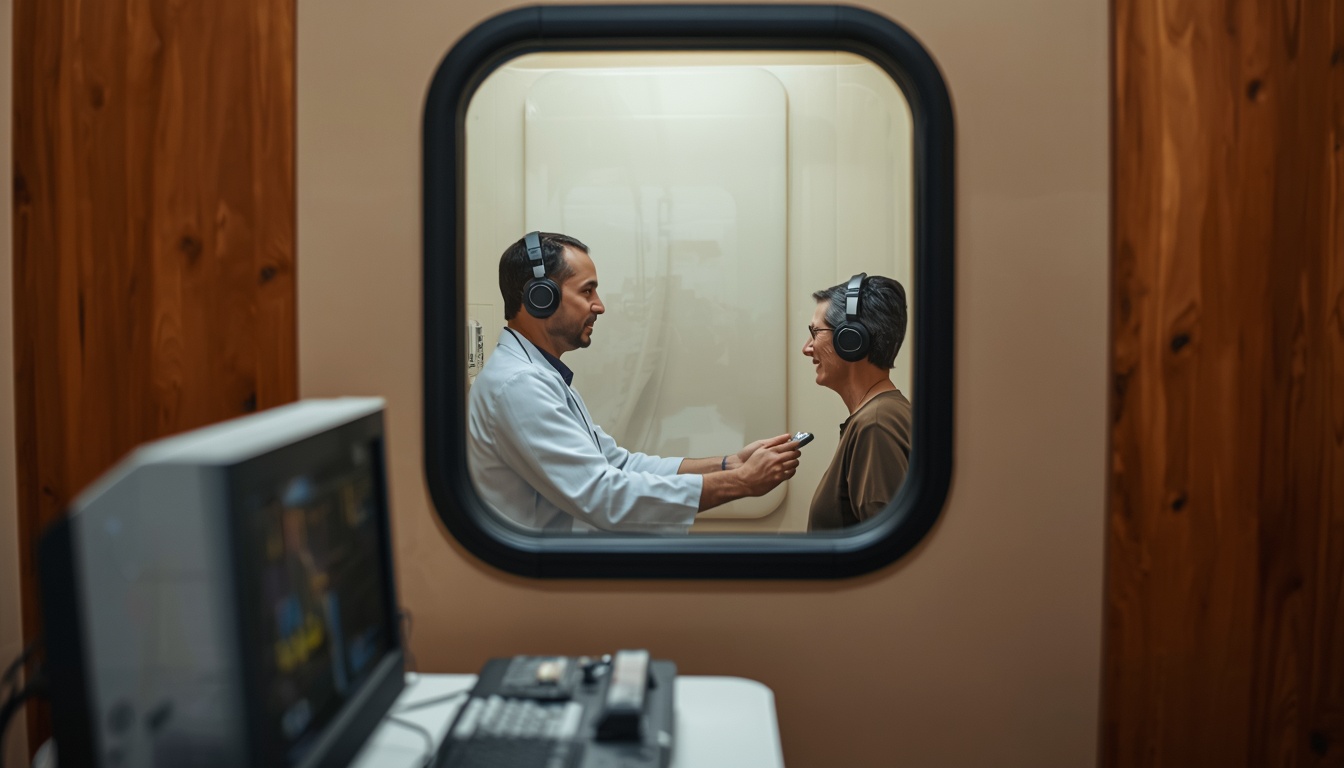
Ear, nose, and throat care covers an unusually wide range of clinical work in one specialty: an otoscopy in the morning, a nasal endoscopy before lunch, an audiogram, a sinus CT review, and a tonsillectomy or thyroid ultrasound follow-up in the afternoon. It also includes a device business, since hearing aids, bone-anchored systems, and cochlear implants need fitting, programming, warranty tracking, and follow-up for years. ENT EMR software gives all of these a structured home, so that a patient's hearing, sinus, voice, and surgical history is in one record.
This guide is for ENT practice owners, hospital otolaryngology departments, and audiology managers evaluating the best ENT EMR. It covers workflows to require, how options compare, pricing, and rollout planning.
Why General EHRs Struggle With ENT
- The exam is anatomical. Ear, nose, and throat findings are region-specific and repeated on both sides, and free text makes them hard to compare between visits.
- Audiometry results are numbers. Right and left ear thresholds in dB HL, speech discrimination, and tympanometry type need fields, not scanned graphs.
- Devices have long lifecycles. A hearing aid or cochlear implant has a serial number, fitting data, mapping sessions, follow-ups, and a warranty that should be tracked.
- Chronic disease is scored. Sinusitis, vertigo, voice, and swallowing conditions use symptom instruments that need to be tracked over time.
- Endoscopy findings are often lost. Flexible laryngoscopy and nasal endoscopy findings should be searchable, not only attached as images.
Core Workflows an ENT EMR Must Support
1. Clinical Examination
The examination record has separate structured sections for the ear (external auditory canal, tympanic membrane, otoscopy notes), the nose (anterior rhinoscopy, septum, turbinates), and the throat (oropharynx, larynx, notes). Audiometry stores right and left ear dB HL, speech discrimination for each ear, and tympanometry type. Endoscopy fields record whether an endoscopy was performed, its type, and its findings, and vestibular testing records whether it was done and what was found. The visit ends with an impression and plan. Because the exam is structured, a clinician can compare last year's tympanic membrane finding with today's.
2. Diagnostic Imaging
Imaging records cover CT sinus, CT temporal bone, MRI of the internal auditory canal, MRI neck, thyroid ultrasound, and neck ultrasound. Each has the clinical indication, findings, impression, ordering and reporting clinicians, and attachments. For the imaging workflow that sits behind these studies, read our guide to the radiology information system.
3. Disease Management
Enrollment supports chronic sinusitis, hearing loss, sleep-disordered breathing, head and neck cancer, voice disorders, swallowing disorders, and vertigo. Each tracks the condition and subtype, control status (well-controlled, partially controlled, uncontrolled, progressing), symptom scores with instrument, score, and date, current therapies, goals, a care plan, and the next review date. Tracking scores such as the SNOT-22 for sinonasal symptoms over time shows whether medical therapy is working or whether surgery should be discussed. For sleep-disordered breathing, our sleep medicine EMR guide explains the wider workflow.
4. Surgical Services
Surgical case records capture the procedure name, indication, laterality, pre-operative plan, operative findings, procedure detail, estimated blood loss, complications, and post-operative care plan, with the primary surgeon's signature. ENT surgery covers a wide range from ear tubes to sinus surgery, tonsillectomy, thyroid and head and neck procedures. Laterality is especially important in ENT, where wrong-side errors are a known risk, so making it a required structured field is a safety feature. For the broader surgical pathway, see our guide to general surgery software.
5. Audiology and Hearing Devices
Device records cover behind-the-ear, in-the-ear, and receiver-in-canal hearing aids, cochlear implants, bone-anchored hearing systems, and middle ear implants. Each stores the ear (left, right, or bilateral), manufacturer, model, serial number, and fitting date. Fitting detail records whether real-ear measurement was done, whether the target was matched, and how many programs were configured. Real-ear measurement is widely regarded as best practice for verifying hearing aid fitting. For cochlear implants, mapping sessions store the date, session number, T-levels, C-levels, and notes. Follow-ups record satisfaction and adjustments made, and warranty status and expiry are tracked so that repairs and replacements are handled on time.
6. Analytics
Dashboards show record volumes across examinations, imaging, disease management, surgical cases, and hearing devices, activity trends by month, and status breakdowns by resource. Managers can see whether audiology capacity, surgical volume, and clinic throughput are in balance.
ENT EMR Comparison: ENT-Focused Systems, Hearing Care Platforms, and Quecorex
| Criteria | General or specialty ambulatory EHR | Hearing care practice management platform | Quecorex ENT module |
|---|---|---|---|
| Best fit | Independent ENT practices | Audiology-only and hearing aid clinics | Hospitals and clinics wanting ENT and audiology inside the hospital record |
| ENT exam and endoscopy | Templates | Limited | Structured ear, nose, throat, endoscopy, and vestibular sections |
| Audiometry | Often attachments | Strong | Thresholds by ear, speech discrimination, tympanometry type |
| Hearing device lifecycle | Limited | Strong | Fitting, real-ear measurement, CI mapping, follow-ups, warranty |
| Surgery and inpatient | Interfaces required | Not applicable | Native with OR, anesthesia, pathology, and billing |
| Pricing model | Per provider per month | Per location or per provider | Specialty bundle or sub-module licensing |
Independent ENT practices often use general or specialty ambulatory EHRs, and audiology-focused clinics often use hearing care practice management platforms such as Sycle or Blueprint OMS alongside fitting software that works with the HIMSA Noah database. If you run ENT and audiology together in a hospital and need OR, anesthesia, pathology, and inpatient connected, an integrated module reduces the number of systems to maintain. Product names belong to their respective owners and this comparison reflects general positioning, so verify capabilities directly with each vendor. See also our EHR platform comparison.
Buyer's Checklist: Choosing the Best ENT EMR
- Does the exam have structured ear, nose, and throat sections with laterality?
- Are audiometry thresholds and tympanometry stored as data?
- Can endoscopy and vestibular findings be recorded and searched?
- Are symptom instruments such as SNOT-22 tracked over time?
- Is laterality a required field on surgical cases?
- Can you track hearing device serial numbers, fitting details, CI mapping, and warranty?
- Does it link to imaging, pathology for head and neck biopsies, and billing?
- What audiometer and fitting software integrations are available and at what cost?
Pricing and Total Cost of Ownership
ENT systems are commonly priced per provider per month; hearing care platforms are priced per location or provider; hospital platforms are quoted per module or per bed. Ask each vendor to price the same scenario: ENT surgeons, audiologists, sites, surgical volume, and device integrations. Include migration, training, and parallel-running costs. Quecorex licenses ENT as a specialty bundle of sub-modules on the core hospital platform.
Need ENT software pricing? Request a Quecorex quote or book a demo built around your ENT and audiology services.
Implementation Timeline
Start with clinical examination and audiometry (weeks 1-3), add diagnostic imaging (week 4), then disease management (weeks 5-6), surgical services (weeks 7-8), and audiology devices with analytics (weeks 9-10). Load the existing device inventory with serial numbers and warranty dates early so that expiry tracking works from launch. Our EMR implementation guide covers training and go-live planning.
Metrics ENT Departments Should Track
- Record volume across exams, imaging, surgery, and devices
- Surgical case volume and complication rate
- Control status distribution for chronic sinusitis and vertigo
- Hearing devices with warranties expiring soon
- Follow-up satisfaction scores after device fitting
- Activity trend by month
Final Thoughts
ENT is a broad specialty, and its software should be broad enough to hold exams, audiometry, imaging, chronic disease, surgery, and devices in one place. Structured data lets clinicians compare, audiologists manage device lifecycles, and leaders see the whole service. Quecorex ENT runs on the same platform as your hospital management system. Book an ENT demo and follow a hearing loss patient from audiogram to cochlear implant mapping.