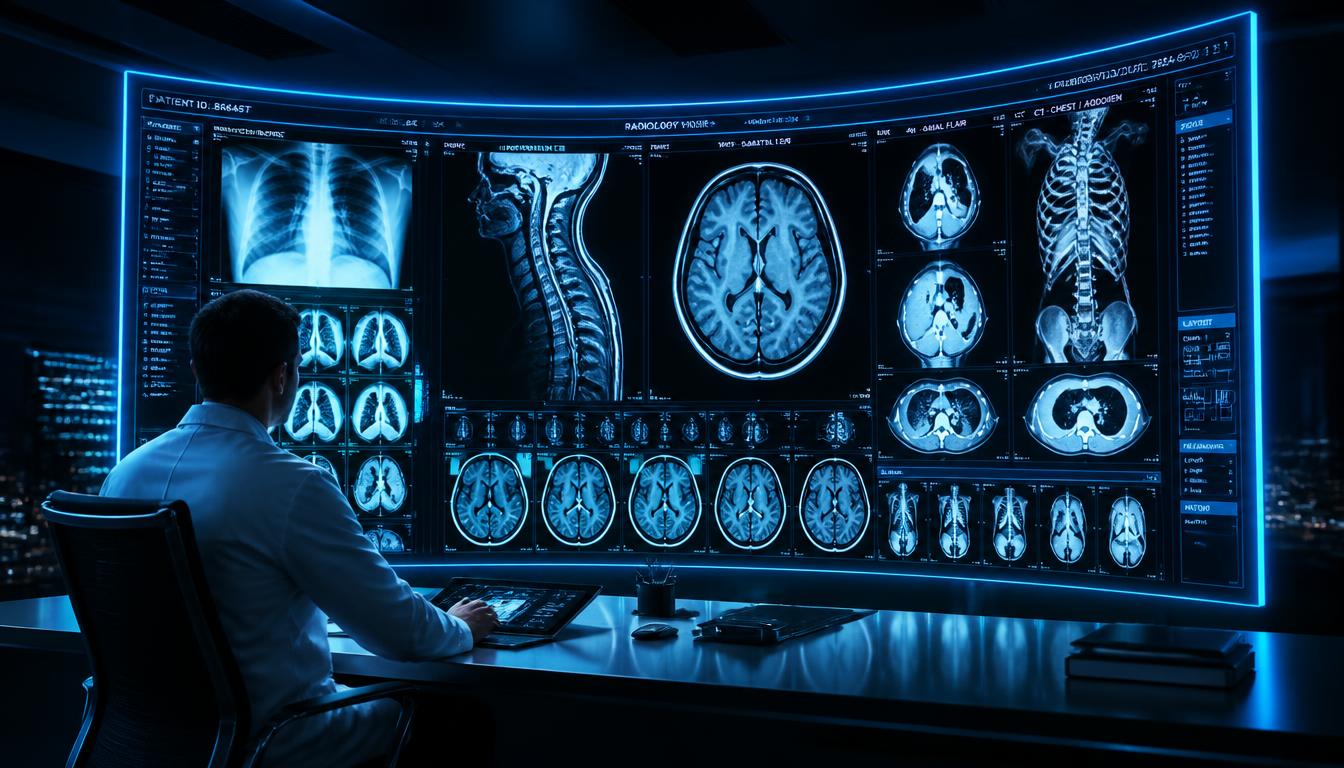
Radiology departments manage some of the highest-value and highest-volume diagnostic workflows in the hospital, processing thousands of imaging studies daily across multiple modalities, with results that directly drive clinical decisions. A Radiology Information System (RIS) orchestrates every aspect of imaging department operations from order receipt through exam scheduling, image acquisition, radiologist reporting, and result communication.
Order Management and Scheduling
Radiology orders from CPOE flow to the RIS where they are scheduled based on: clinical priority (STAT vs. routine), modality availability, patient preparation requirements, and radiologist specialization. Insurance prior authorization tracking ensures coverage verification before resource-intensive studies are performed. Patient preparation instructions (NPO for contrast studies, bowel prep for CT colonography) are automatically generated and communicated at scheduling.
Modality Worklist (MWL) Integration
DICOM Modality Worklist integration pushes scheduled examination information directly to imaging equipment (CT scanners, MRI, X-ray, ultrasound). Technologists select the patient study from the modality worklist, eliminating manual patient demographic entry at the scanner that causes study attribution errors. Correct patient identification from worklist reduces wrong-patient imaging studies, which account for 10% of radiology sentinel events.
PACS Integration and DICOM Standards
Picture Archiving and Communication System (PACS) stores all digital imaging studies in DICOM format. RIS-PACS integration links examination records in the RIS with images in PACS, enabling radiologists to open studies directly from their reading worklist without manual search. DICOM standards govern image format, storage, transmission, and display to ensure compatibility across equipment from different manufacturers. HL7 messaging communicates order and result information between RIS and EMR.
Radiologist Reading Worklist
Radiologist worklists prioritize studies by: examination priority (STAT, urgent, routine), modality assignment, patient location (ED patients prioritized over elective outpatients), and study age. AI-assisted pre-reads flag potentially critical findings for priority review. Sub-specialty routing directs neuroradiology studies to neuroradiologists, pediatric cases to pediatric radiologists, and breast imaging to dedicated mammography readers.
Radiology Reporting
Structured reporting using ACR/RSNA report templates ensures complete, consistent reports across radiologists and modalities. Voice recognition dictation with medical vocabulary integrates with report templates for efficient reporting. Report versions (preliminary vs. final) are tracked with timestamp and radiologist signature. Addendum capabilities enable corrections and amendments while preserving the original report for medicolegal purposes.
Critical Finding Communication
Radiologists must communicate critical or unexpected significant findings to the ordering provider within defined time standards (Joint Commission and ACR requirements). RIS critical finding workflows enable direct electronic notification to the ordering physician with mandatory acknowledgment documentation. Escalation pathways for non-response ensure critical findings reach a responsible clinician even when the ordering physician is unavailable.
Radiation Dose Monitoring
CT radiation dose tracking (using CTDI and DLP values from DICOM dose structured reports) identifies studies with unusually high doses that may warrant protocol review. Cumulative patient dose tracking identifies patients receiving frequent high-dose imaging. NCRP dose reference levels and ACR dose benchmarks guide protocol optimization. Automated dose alerts flag individual studies exceeding dose reference levels for radiologist and physicist review.
Ready to optimize your Radiology Information System Ris Complet workflows? Book a tailored Quecorex demo today.
Turnaround and Quality Metrics
| Metric | What it shows |
|---|---|
| Order to scan time | Scheduling and access |
| Scan to report time | Radiologist workload and workflow |
| Critical finding communication time | Patient safety |
| Repeat examination rate | Technique and equipment quality |
| Discrepancy review results | Reporting accuracy |
| Radiation dose by examination | Adherence to dose optimisation practice |
Structured Reporting
Templates for common examinations make reports consistent, faster to write, and easier for referring doctors to read. They also produce structured data that can feed quality reviews. Ask vendors to show template creation, voice dictation support, and how a report is corrected or amended while keeping the original visible.
Implementation Tips
- List every modality and confirm DICOM connectivity and modality worklist support for each.
- Decide who reads where: on-site, remote, or outsourced, and test remote access.
- Plan storage and backup for image volumes, which grow quickly.
- Prepare downtime procedures for scheduling and reporting.
- Train technologists, radiologists, and front desk staff separately on their workflows.
Read our guide to laboratory information systems for the companion workflow, and estimate the radiology module in the pricing estimator.
Scheduling Imaging Fairly and Efficiently
Imaging departments juggle machines, rooms, staff, and patient preparation. Different examinations need different time slots, some need contrast or fasting, and emergencies interrupt the plan. Good RIS scheduling handles resource rules, such as which room has which modality, patient preparation instructions sent automatically, and priority handling for urgent requests. It should also reduce no-shows through reminders. Ask vendors to show a day with an unexpected emergency case, and how the schedule reflows without losing track of anyone.
Remote Reading and Teleradiology
- Secure image access. Radiologists must see images and prior studies from outside the hospital.
- Worklist distribution. Studies are routed to the right reader by priority, modality, or specialty.
- Turnaround tracking. Managers can see whether remote readers meet agreed times.
- Communication. Critical findings still need a documented conversation with a clinician on site.
- Bandwidth. Image volumes are large, so test performance over the connections you will actually use.
Retention, Archiving, and Prior Studies
Comparing a new scan with an old one improves accuracy, so prior studies must be easy to find. Decide how long images are kept online, how older studies are archived, and how quickly they can be retrieved. Storage grows quickly with modalities such as CT and MRI, and retention periods depend on national rules. Include storage and backup costs in your budget and ask how the system handles patients whose images are stored under several identifiers.
Imaging equipment needs regular calibration and maintenance, which you can track with biomedical equipment management. Independent imaging businesses will also find our diagnostic centre software guide useful.
Conclusion
A high-performing RIS reduces radiologist turnaround time, prevents study attribution errors, enables critical finding communication within regulatory timeframes, and provides the analytics needed to optimize imaging department operations. Quecorex RIS integrates with any PACS via DICOM standards and connects to the hospital EMR for seamless order-to-report workflow in imaging departments worldwide.