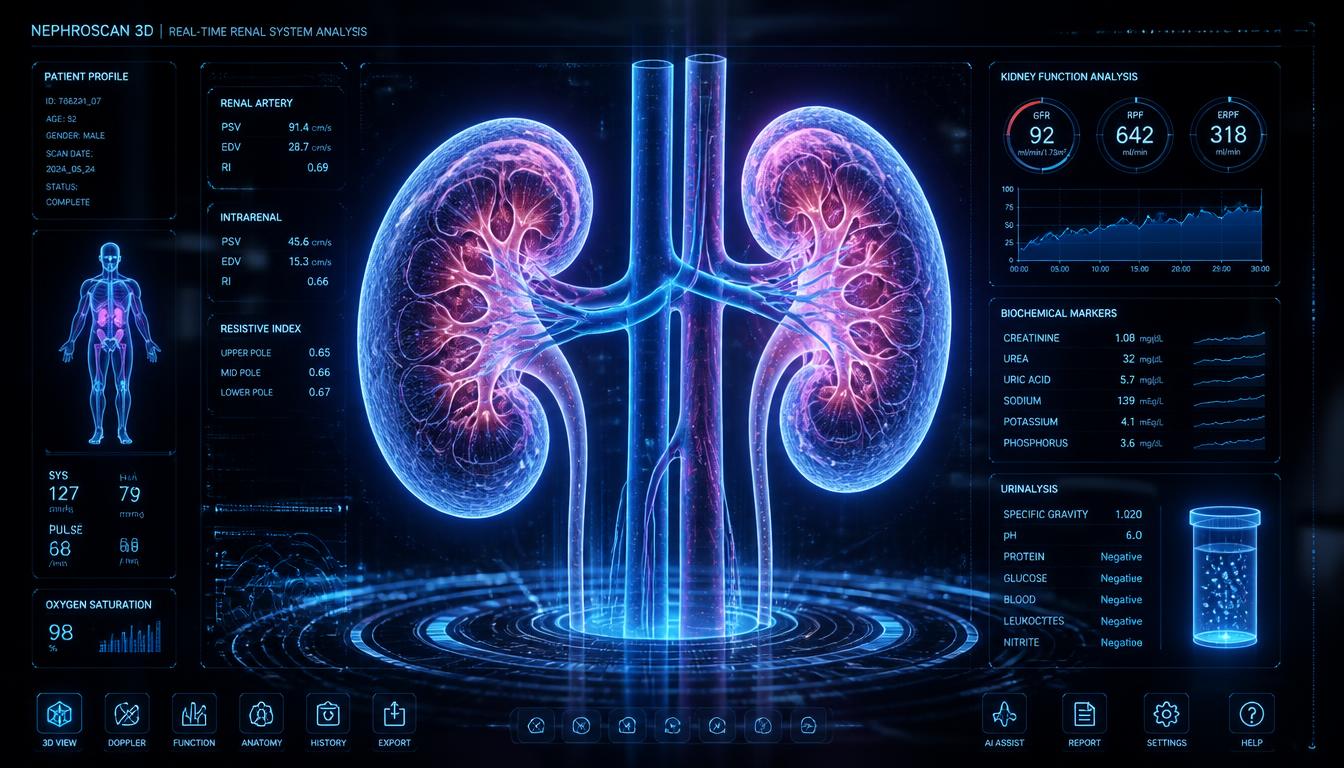
Nephrology and dialysis center management demands specialized software capabilities that general EMR systems cannot provide. From documenting complex hemodialysis treatments to managing peritoneal dialysis programs, tracking CKD progression through all five stages, and coordinating kidney transplant workups, nephrology software must support the full spectrum of kidney disease care with the clinical specificity that nephrologists and dialysis nurses require.
Hemodialysis Treatment Documentation
Each hemodialysis treatment requires detailed documentation: vascular access assessment (AV fistula, graft, or catheter condition), pre- and post-dialysis weights (to calculate fluid removal target), blood pressure at multiple time points, dialysis parameters (blood flow rate, dialysate flow rate, dialyzer, anticoagulation), and treatment complications (hypotension, cramping, access bleeding). Kt/V adequacy calculations are automated from treatment data, with automatic flagging when adequacy targets are not met.
Peritoneal Dialysis Management
PD management tracks daily exchange logs (fill volume, dwell time, drain volume, drain character), APD (automated peritoneal dialysis) machine download integration, peritoneal equilibration test (PET) results, and peritonitis episodes (including organism, treatment, and outcome). PD adequacy (weekly Kt/V) is calculated automatically. Exit site and tunnel assessments are documented with structured forms.
CKD Staging and Progression Tracking
CKD staging using KDIGO 2012 criteria (GFR category + albuminuria category) is automated from creatinine and urine albumin values. Longitudinal eGFR graphs display kidney function trajectory, identifying rapid progressors who may benefit from early transplant referral or intensified medical management. CKD complication tracking covers anemia management (hemoglobin, iron studies, erythropoietin dosing), mineral metabolism (calcium, phosphorus, PTH, vitamin D), and cardiovascular risk factor management.
ESRD Quality Reporting
End-Stage Renal Disease (ESRD) facilities in the USA must report quality measures to CMS through the ESRD Quality Incentive Program (QIP). Automated quality metric calculation covers: Kt/V adequacy, hypercalcemia rate, standardized transfusion ratio, standardized hospitalization ratio, patient experience measures, and mineral metabolism targets. QIP reporting directly impacts CMS payment rates, accurate automated reporting prevents costly payment adjustments.
Transplant Coordination
Kidney transplant candidacy evaluation, UNOS listing requirements, panel reactive antibody (PRA) tracking, and transplant follow-up documentation are integrated within the nephrology module. Pre-transplant workup checklists ensure all required evaluations are completed before listing. Post-transplant immunosuppression management with drug level monitoring (tacrolimus, cyclosporine levels) and biopsy result tracking support long-term graft function management.
Vascular Access Management
Vascular access program management tracks every patient's access history: fistula creation date, maturation timeline, cannulation training, access-related complications, interventions (angioplasty, thrombectomy, revision), and current status. Fistula First initiatives are supported through AV fistula placement rate tracking and catheter dependence reduction dashboards. Nurse-physician communication about access problems is streamlined through integrated messaging workflows.
Medication Management for Kidney Disease
Renal dosing adjustment is critical in nephrology, many medications require dose reduction or are contraindicated in kidney disease. Integrated renal dosing calculators using CKD-EPI eGFR equations automatically adjust recommended doses for creatinine clearance categories. Dialysability information guides post-dialysis supplemental dosing decisions. Medication safety alerts flag nephrotoxic agents that should be avoided or used with extreme caution.
Ready to optimize your Nephrology Software Dialysis Center Mana workflows? Book a tailored Quecorex demo today.
Measures a Dialysis Unit Tracks Every Month
| Measure | Why it matters |
|---|---|
| Dialysis adequacy (for example Kt/V or urea reduction ratio) | Whether patients are receiving enough dialysis |
| Anaemia and mineral bone markers | Guides medication and diet |
| Vascular access type and complications | Infection and access failure drive hospital admissions |
| Interdialytic weight gain and blood pressure | Patient stability during treatment |
| Missed and shortened sessions | Adherence and outcomes |
| Hospitalisations and infections | Quality of care and safety |
Running the Unit Day to Day
- Scheduling. Chair and machine allocation by shift, with room for extra sessions and infection control needs.
- Pre, intra, and post-treatment records. Weights, vital signs, machine settings, and events captured at the chairside.
- Water and machine logs. Disinfection and maintenance records available for inspection.
- Consumables. Dialysers, lines, and concentrates tracked per session.
- Laboratory integration. Monthly labs ordered, resulted, and trended automatically.
Price the specialty module in the pricing estimator, and see our guide to hospital inventory for consumables control.
Patient Journey in Chronic Kidney Disease
Kidney care runs over many years. Patients move from early kidney disease, monitored in outpatient clinics, to advanced disease with preparation for dialysis or transplant, and then to long-term treatment. A good system supports each stage: staging based on estimated filtration rate and protein in urine, tracking of blood pressure and medicines, education, referral and pre-dialysis planning, vascular access creation, and transplant workup. Registers of patients by stage make it easier to recall those who are overdue for tests and to plan resources.
Dialysis Session Safety
| Area | Checks to record |
|---|---|
| Before treatment | Identity, weight, blood pressure, access inspection, machine and water checks |
| During treatment | Blood flow, pressures, symptoms, medications, alarms and interventions |
| After treatment | Weight, blood pressure, access care, discharge condition |
| Infection control | Screening, isolation needs, cleaning and disinfection records |
| Equipment | Machine maintenance, water quality tests, consumable lot numbers |
Managing the Unit as a Business
- Schedule chairs and shifts so demand and staffing match.
- Track consumables per session and reorder before stock-outs. See hospital inventory management.
- Keep equipment maintained and calibrated. See biomedical equipment management.
- Bill per session or package according to your payers, with clear authorisation tracking.
- Record nursing care consistently. See nursing management software.
Conclusion
Nephrology practices and dialysis centers require software built for their clinical complexity, not generic EMR modules that miss the nuance of kidney disease management. Quecorex Nephrology module integrates seamlessly with the full hospital EMR for inpatients and as a standalone solution for dialysis centers and nephrology practices worldwide.