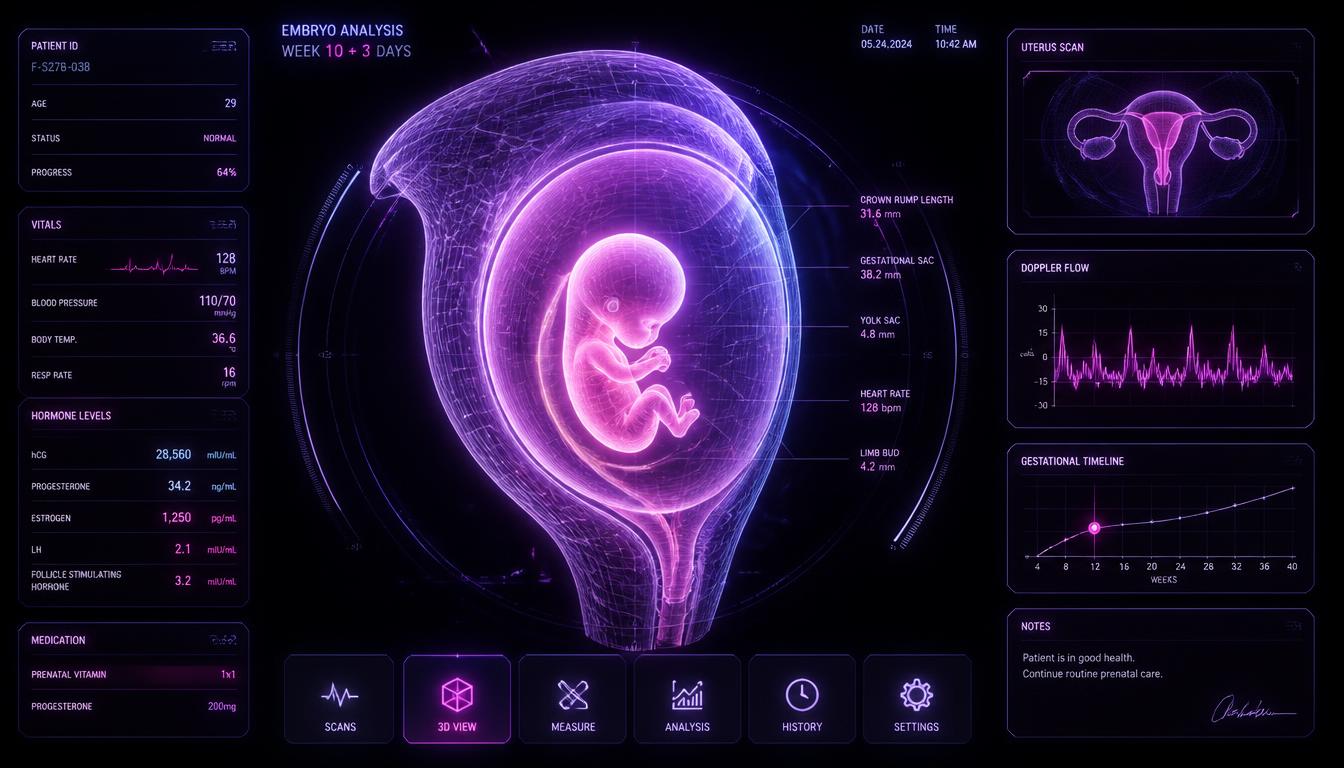
Women's health encompasses a remarkable range of clinical complexity, from routine gynecologic care and contraception counseling through high-risk pregnancy management and labor and delivery through fertility treatment and menopausal care. A purpose-built Gynecology EHR supports every dimension of women's health with specialized documentation tools, clinical calculators, and workflow automation designed specifically for obstetrics and gynecology practices.
Prenatal Care Management
Prenatal care follows structured visit protocols at defined gestational ages: initial OB intake with complete obstetric history, subsequent visits tracking weight gain, blood pressure, fundal height, fetal heart tones, and fetal movement. Gestational age calculation from LMP or ultrasound dating, EDD confirmation, and trimester-specific screening recommendations (first trimester aneuploidy screening, second trimester anatomy scan, glucose challenge test, GBS screening) are automated based on gestational age at each visit.
High-Risk Pregnancy Management
High-risk obstetric conditions require specialized tracking: preeclampsia surveillance (blood pressure trends, proteinuria, symptoms), gestational diabetes management (glucose logs, insulin adjustments, growth ultrasound scheduling), preterm labor risk monitoring (cervical length measurements, fetal fibronectin results), and fetal growth restriction (biophysical profile scores, umbilical artery Doppler). Maternal-fetal medicine consultation workflows integrate high-risk pregnancy management into the primary OB documentation.
Labor and Delivery Documentation
Labor documentation captures admission assessment, cervical examination serial measurements (dilation, effacement, station, presentation), contraction frequency and duration, fetal heart rate monitoring interpretation (Category I/II/III tracings), labor progress graphing (Friedman curve or contemporary labor curve), oxytocin and other labor augmentation orders, anesthesia and epidural management, and delivery documentation (delivery time, delivery type, presenting part, APGAR scores, cord blood status, placenta inspection).
Fertility and IVF Management
Fertility treatment documentation tracks ovarian stimulation protocols (gonadotropin doses, follicle monitoring ultrasounds, estradiol levels), oocyte retrieval (follicle count, oocyte count, maturity), insemination and fertilization results, embryo development grading, embryo transfer details, and luteal phase support. IUI (intrauterine insemination) documentation captures sperm analysis, preparation results, insemination timing, and cycle outcomes. The fertility module integrates with the broader reproductive endocrinology workflow.
Gynecologic Procedure Documentation
Colposcopy documentation (cervical examination findings, biopsy sites, adequacy assessment), endometrial biopsy reports, hysteroscopy findings, LEEP/LLETZ procedure documentation, and office laparoscopy reports are all supported with specialty-specific templates. Pap smear result tracking with ASCCP guideline-based management recommendations ensures appropriate follow-up for abnormal cervical cytology results.
Postpartum Care
Postpartum visits at 2 and 6 weeks capture: wound healing (perineal lacerations, cesarean incision), contraception discussion and prescription, breastfeeding assessment, Edinburgh Postnatal Depression Scale (EPDS) screening for postpartum depression, and return to activity guidance. Postpartum depression screening results automatically trigger care coordination workflows when EPDS scores exceed clinical thresholds.
Contraception Management
Contraceptive counseling documentation captures method selection, patient preferences, medical eligibility criteria (WHO MEC classification), prescription or placement records, and follow-up scheduling. IUD and implant placement procedures generate procedure notes with device lot numbers, placement technique, and patient-reported outcomes. Contraceptive failure and method switch history provide longitudinal reproductive health records.
Ready to optimize your Gynecology Ehr Womens Health Fertility O workflows? Book a tailored Quecorex demo today.
Antenatal Care Needs a Flexible Schedule
The World Health Organization recommends a minimum of eight contacts with a health professional during pregnancy, and many facilities schedule visits according to risk. Your EMR should let you configure visit schedules by risk level, prompt for routine tests at the right gestational age, and highlight overdue items. It should also show gestational age and expected delivery date clearly on every screen.
Labour and Delivery Records
- A partogram or equivalent chart to record progress, fetal heart rate, and maternal observations over time.
- Clear documentation of interventions, medications, and decisions with time stamps.
- Newborn details linked to the maternal record and to the neonatal record where relevant.
- Handover between shifts and units, with alerts for high-risk patients.
Privacy and Sensitivity
Women's health records include sensitive information about pregnancy, contraception, and fertility. Use role-based access and audit trails, and confirm how adolescent confidentiality and consent are handled in your country. Fertility clinics also need strict traceability of gametes and embryos, with witnessing steps recorded, so ask fertility-specific questions if you offer those services.
Check the specialty module structure in the pricing estimator, and read about pediatric records and neonatal care for the newborn side.
Outpatient Gynaecology Workflows
General gynaecology clinics see a wide mix: contraception, menstrual disorders, screening, menopause, pelvic pain, infections, and pre-conception care. The EMR should offer quick templates for common visits, support for procedures such as colposcopy or coil insertion with consent and equipment records, and structured screening histories with reminders when tests are due. Results from cervical screening or imaging should be linked to follow-up tasks, so an abnormal result never depends on someone remembering to check.
Pregnancy Through Postnatal Care
| Phase | Key software support |
|---|---|
| Booking | History, risk assessment, baseline tests, dating and expected delivery date |
| Antenatal visits | Measurements, blood pressure, urine tests, growth charts, scan and test tracking |
| High-risk monitoring | Flags, extra visit schedules, shared care with specialists |
| Labour and delivery | Partogram, interventions, medications, newborn details |
| Postnatal care | Maternal and newborn checks, feeding support, contraception counselling |
Linking mother and baby records carefully helps with vaccinations and newborn screening. See the newborn side in our guides to pediatric EHR software and NICU software.
Practical Tips for Clinics and Maternity Units
- Give patients access to appointment information and test results through a patient portal, with care for sensitive information.
- Use nursing tools for ward care, observations, and medicines. See nursing management software.
- Plan staffing for unpredictable demand, especially on delivery suites.
- Prepare downtime procedures for labour ward records.
- Review outcomes such as caesarean rate, postpartum haemorrhage, and neonatal outcomes with clinicians.
Next Steps
Women's health deserves software that honors the complexity and sensitivity of obstetric and gynecologic care. Quecorex Gynecology EHR provides purpose-built workflows for every stage of women's reproductive health, from first prenatal visit through labor and delivery, fertility treatment, and preventive gynecologic care, with full integration into the hospital EMR for seamless care coordination.