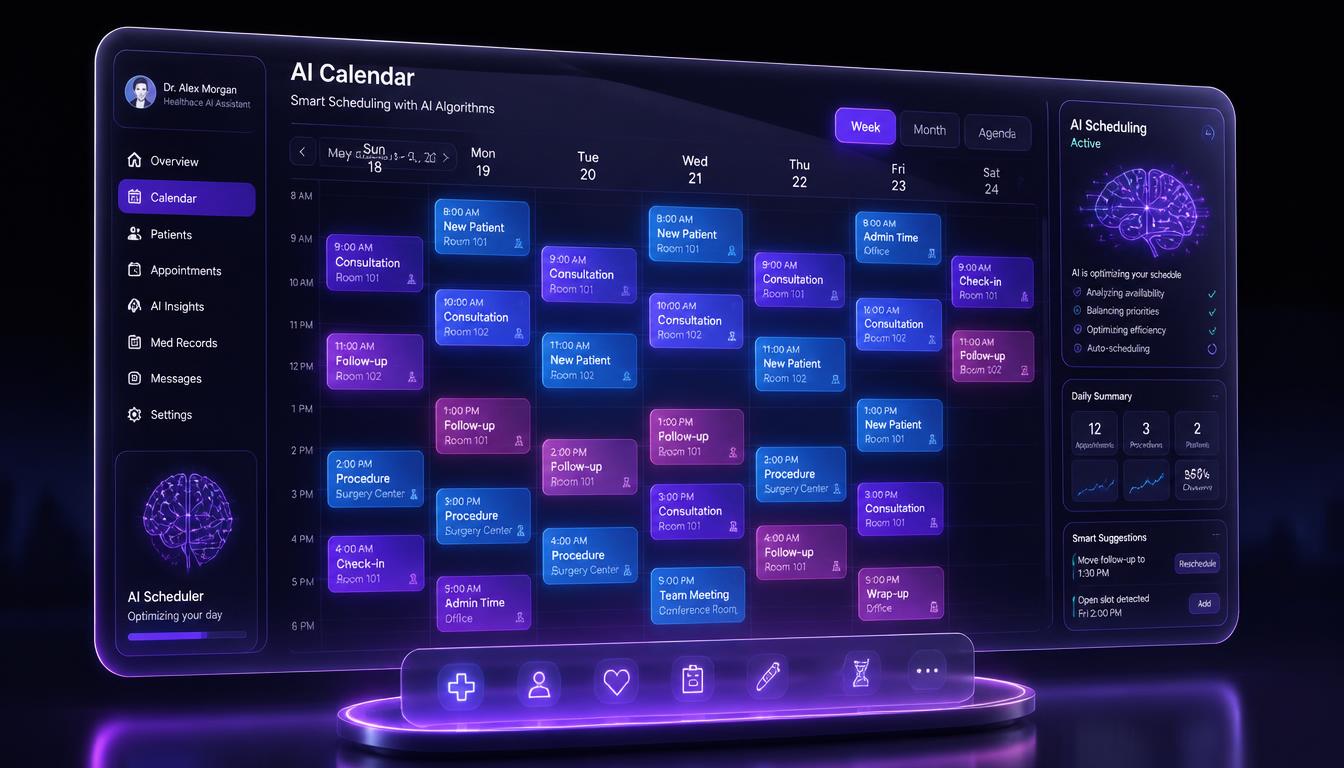
Appointment no-shows cost the US healthcare system $150 billion annually and reduce provider utilization to 75–80% of theoretical capacity. Every empty appointment slot is revenue lost and a patient who did not receive timely care. AI appointment scheduling optimization attacks this problem systematically, predicting which patients will not show, automatically filling canceled slots, and optimizing schedule templates to maximize the productive use of every clinical hour.
No-Show Prediction
AI models analyze 50+ behavioral, demographic, and historical factors to predict individual appointment no-show probability: prior no-show history (the strongest single predictor), appointment lead time, day of week, appointment type, transportation access, insurance type, reminder response behavior, and weather forecasts. Models achieve 80–87% accuracy, far exceeding clinical intuition or simple historical rate calculations.
Automated Waitlist Management
When a high no-show-risk patient is identified, AI automatically contacts waitlisted patients to fill the slot proactively. When cancellations occur, AI ranks the waitlist by clinical priority, availability match, and no-show risk score, then sends automated appointment offers to the highest-ranked patients. Fill rates for canceled appointments improve from 40% (manual process) to 75%+ with AI waitlist management.
Dynamic Schedule Templates
Traditional fixed schedule templates waste capacity. AI analyzes historical no-show rates by appointment type, time slot, day, and patient segment to create dynamic templates that strategically double-book high-risk slots. When two patients are scheduled for the same time, AI calculates the probability that both will arrive and ensures the schedule accommodates the most likely scenario. Provider utilization increases from 75% to 90–95%.
OR Block Scheduling Optimization
Operating Room scheduling is among the most complex and highest-value optimization problems in hospital operations. AI analyzes surgeon utilization patterns, case duration variability, equipment requirements, and staffing availability to optimize block schedule allocation. Underutilized blocks are identified and reallocated. Case duration predictions based on surgeon-specific historical performance reduce late-start cascade effects. OR utilization improvements of 10–15% translate to millions of dollars in annual revenue per OR suite.
Recall and Preventive Care Scheduling
AI identifies patients due for preventive appointments (annual physicals, cancer screenings, chronic disease follow-ups) based on their clinical profile and last visit history. Automated outreach fills preventive care slots proactively, improving population health metrics and HEDIS quality scores while generating revenue from appointments that would otherwise never be scheduled.
Patient Communication Automation
Multi-channel appointment reminders (SMS, email, phone call, patient portal) at optimized timing (48 hours, 24 hours, day-of) reduce no-show rates by 20–30% through reminder effectiveness alone. AI personalizes reminder channel and timing based on individual patient response patterns, some patients respond to SMS; others to email; others require phone calls. Personalizing the outreach channel maximizes reminder effectiveness.
ROI Calculation
For a primary care practice with 10 providers seeing 25 patients/day each: eliminating 3 no-shows per provider per day (12% no-show rate) at $150 average revenue per appointment generates $450,000 additional annual revenue. For a hospital OR suite, 10% utilization improvement on a $1M/day OR generates $365,000 additional annual revenue per OR room.
Ready to optimize your Ai Appointment Scheduling Optimizer No S workflows? Book a tailored Quecorex demo today.
Use Prediction Fairly
Predicting who is likely to miss an appointment can help, but it must be used carefully. Overbooking based on predicted no-shows raises waiting for those who do attend, and any prediction can reflect unfair patterns, for example by penalising patients who face transport or cost barriers. A better first use is supportive: send extra reminders, offer transport information, or make rescheduling easy for patients flagged as at risk. Review outcomes by patient group to check that nobody is being disadvantaged.
A Practical No-Show Reduction Plan
- Measure your baseline no-show rate by clinic, day, time, and appointment type.
- Send reminders through the channels patients actually use, with an easy way to confirm or cancel.
- Offer simple rescheduling so patients who cannot attend free the slot.
- Keep a wait list that fills cancelled slots quickly.
- Shorten booking lead times where possible, since long waits increase no-shows.
- Review results monthly and adjust.
Put your numbers into the ROI calculator to see what a lower no-show rate is worth, and read about scheduling fundamentals in our appointment scheduling guide. See module costs in the pricing estimator.
Why Patients Miss Appointments
Understanding causes helps you choose remedies. Common reasons include forgetting, transport problems, cost, work or family conflicts, feeling better, fear of the visit or results, and confusion about time or place. Different reasons need different responses: reminders for forgetting, easy rescheduling for conflicts, transport information or telehealth for access, and clear explanations for anxiety. Ask patients who miss visits why, and record the reasons in a structured way so you can see patterns.
Reminder Design That Works
| Element | Good practice |
|---|---|
| Timing | An early reminder plus one close to the visit |
| Channel | Use the channel the patient prefers, such as SMS, app message, or call |
| Content | Date, time, place, provider, preparation, and how to change |
| Response | One-tap confirm or cancel that updates the schedule automatically |
| Language | The patient's language, in short simple sentences |
Filling Freed Slots
- When a patient cancels, release the slot immediately.
- Offer it to patients on the wait list, ordered by need and time waiting.
- Notify them by message with a quick accept option.
- Record the outcome and update the wait list.
- Review how many freed slots are filled and how quickly.
These basics deliver most of the gain before any prediction is needed. See our guides to queue management for flow on the day, the patient portal for easy self-service, and clinic management software. AI features in Quecorex have no monthly module fee; you buy AI credits and pay for what you use.
Next Steps
Scheduling optimization is one of the fastest-ROI AI applications in healthcare operations, with measurable impact visible within weeks of deployment. Quecorex AI Scheduling Optimizer integrates directly with the appointment management module, requiring no separate software or data warehouse, AI optimization is built into the scheduling workflow from day one.