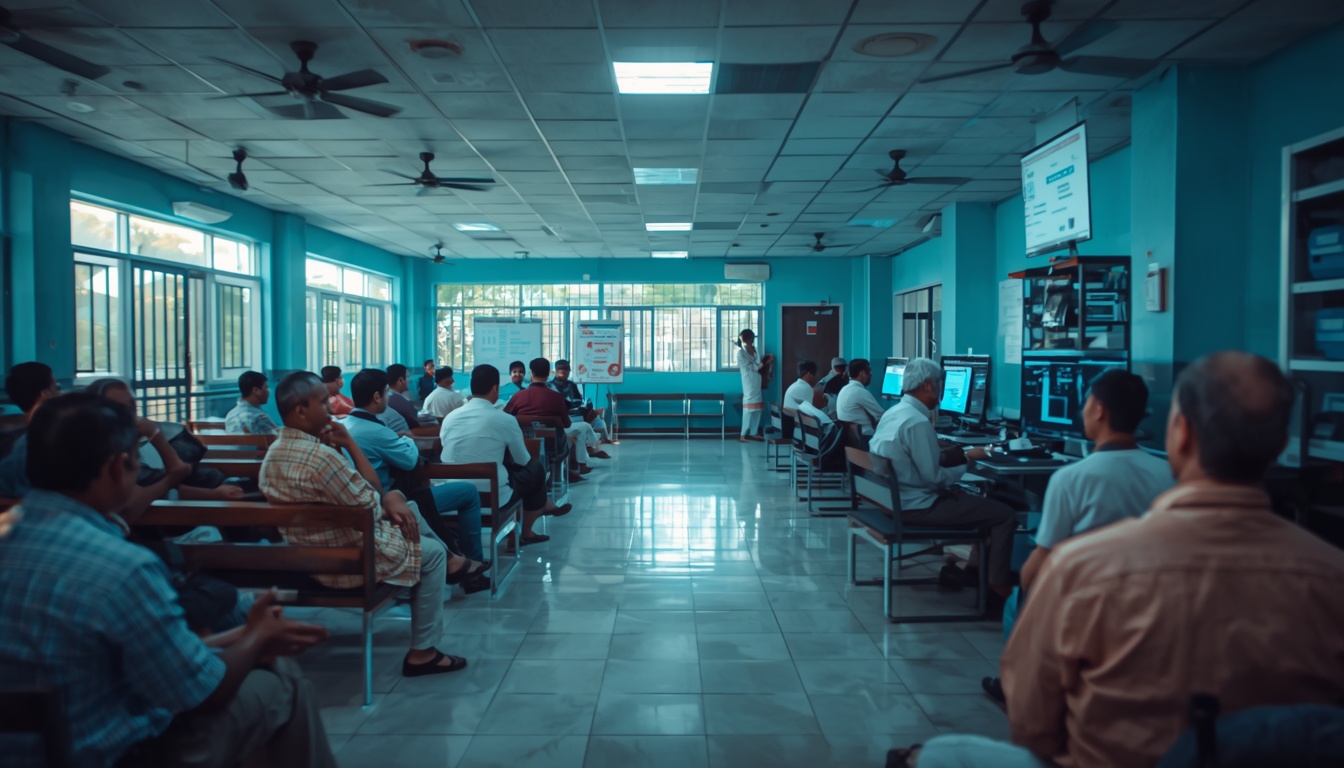
Bahmni is an open source hospital system built for low-resource settings. It was developed by ThoughtWorks Global Health and released under the AGPL licence. Instead of building everything from scratch, it combines proven open source products: OpenMRS for the clinical record, Odoo for inventory, billing, and accounting, OpenELIS for laboratory management, and DCM4CHEE for imaging (PACS) integration. It has been deployed mainly in countries such as India, Bangladesh, and Nepal, and more widely since.
If you run a hospital in Africa or Asia and are weighing Bahmni versus commercial hospital software, this guide shows where Bahmni shines and where a commercial option may save you time and risk. Product names are trademarks of their owners. Please verify current details with the Bahmni community and any vendor.
What Bahmni Gives You
Bahmni's appeal is that it is a ready-made hospital distribution, not just a record system. Out of the box it gives you patient registration, a clinical module, a laboratory connection, a pharmacy and inventory back end through Odoo, and billing driven by clinical orders. It is designed to work in settings with limited infrastructure, and its community includes implementers who have run it in real hospitals.
- No licence fee. You can use and adapt it freely under its open source licence.
- An integrated stack. Clinical, laboratory, inventory, and billing components already work together.
- Field experience. It was designed for low-resource hospitals and clinics.
- Openness. You can inspect, adapt, and host it yourself.
What You Take On
Because Bahmni combines several separate open source systems, you are effectively operating several systems. That comes with tasks that a commercial vendor would normally carry for you:
- Deployment and hosting. Servers, backups, monitoring, and disaster recovery.
- Upgrades. Each component evolves on its own schedule, and upgrades need testing.
- Configuration. Forms, price lists, formularies, and workflows must be set up for your hospital.
- Local adaptation. Insurance claims, tariffs, national reporting, and language often need extra work.
- Security. Access control, patching, and data protection are your responsibility.
- Support. Community help is real but is not a service level agreement. Paid partners exist and should be priced.
Side-by-Side
| Topic | Bahmni | Commercial hospital software |
|---|---|---|
| Licence | Free (open source) | Subscription or licence |
| Scope out of the box | Clinical, lab, inventory, billing | Varies, often broader with more modules |
| Who runs it | You or a partner | Vendor, often hosted |
| Insurance claims | Usually needs adaptation | Commonly a built-in module |
| Nursing, HR, biomedical | Typically outside the core | Often available as modules |
| Support | Community or paid partner | Contracted |
| Budgeting | Variable, depends on labour | Predictable subscription |
When Bahmni Is a Good Choice
Bahmni fits when you have skilled technical staff or a trusted implementation partner, you value open source and independence, you are comfortable maintaining several components, and your workflows match its design. NGOs and mission hospitals often fit this profile, and so do teams that plan to customise heavily.
When Commercial Software Is the Better Bet
Commercial software tends to win when you need to go live quickly, want insurance claims, nursing, and human resources in the same system, lack in-house engineers, or want a single accountable supplier. It also helps when your auditors, insurers, or investors expect vendor-backed support and clear service levels.
How to Cost Both Fairly
The mistake is to compare a licence fee with zero. Instead, compare a three-year total that includes hosting, implementation, integrations, training, security work, support, and your own staff time. For Bahmni, price the partner or engineer you will need. For a commercial system, use the vendor's full quote including one-time fees.
How Quecorex Compares
Quecorex is a commercial, modular platform. It brings the clinical record, laboratory, radiology, pharmacy, inventory, billing with claims and pre-authorisation, nursing, human resources, biomedical engineering, and dashboards into one system, with HL7 and FHIR interoperability. It is priced per module and adjusted by country, viewable in the pricing estimator. It is a good fit for hospitals that want breadth without assembling and maintaining several separate systems. Bahmni may be better for organisations that want complete open source control.
You can also read our guides to laboratory information systems and hospital inventory management to see what a full hospital system needs.
A Reality Check on Deployment
Because Bahmni bundles several separate systems, a typical deployment involves the clinical application, the ERP for stock and billing, a laboratory system, an imaging server, and the connections between them. That is a lot of moving parts for a small hospital. Before you commit, ask an experienced implementer these questions:
- How many servers or virtual machines does a hospital of our size need?
- What is a realistic timeline from kickoff to go-live, and what did the last three deployments actually take?
- Which parts needed custom work for those deployments?
- How are upgrades handled across the components, and how often?
- What does annual support cost, and what does it cover?
- What is the plan if the implementer disappears?
Skills You Will Need
| Skill | Why |
|---|---|
| Linux and database administration | Hosting, backups, and monitoring |
| Application configuration | Forms, price lists, and workflows |
| ERP administration | Stock, purchasing, and accounting in the ERP component |
| Integration and troubleshooting | Keeping components in sync |
| Clinical informatics | Translating clinical needs into configuration |
| Training | Getting staff productive quickly |
If that list reads like a team you already have or can contract, Bahmni is a serious option. If it reads like a team you cannot afford, a hosted commercial system moves those responsibilities to the vendor.
Next Steps
Score both options with the EMR selection scorecard, write your needs with the RFP template, and if you would like to see Quecorex handle your scenarios, book a demo.