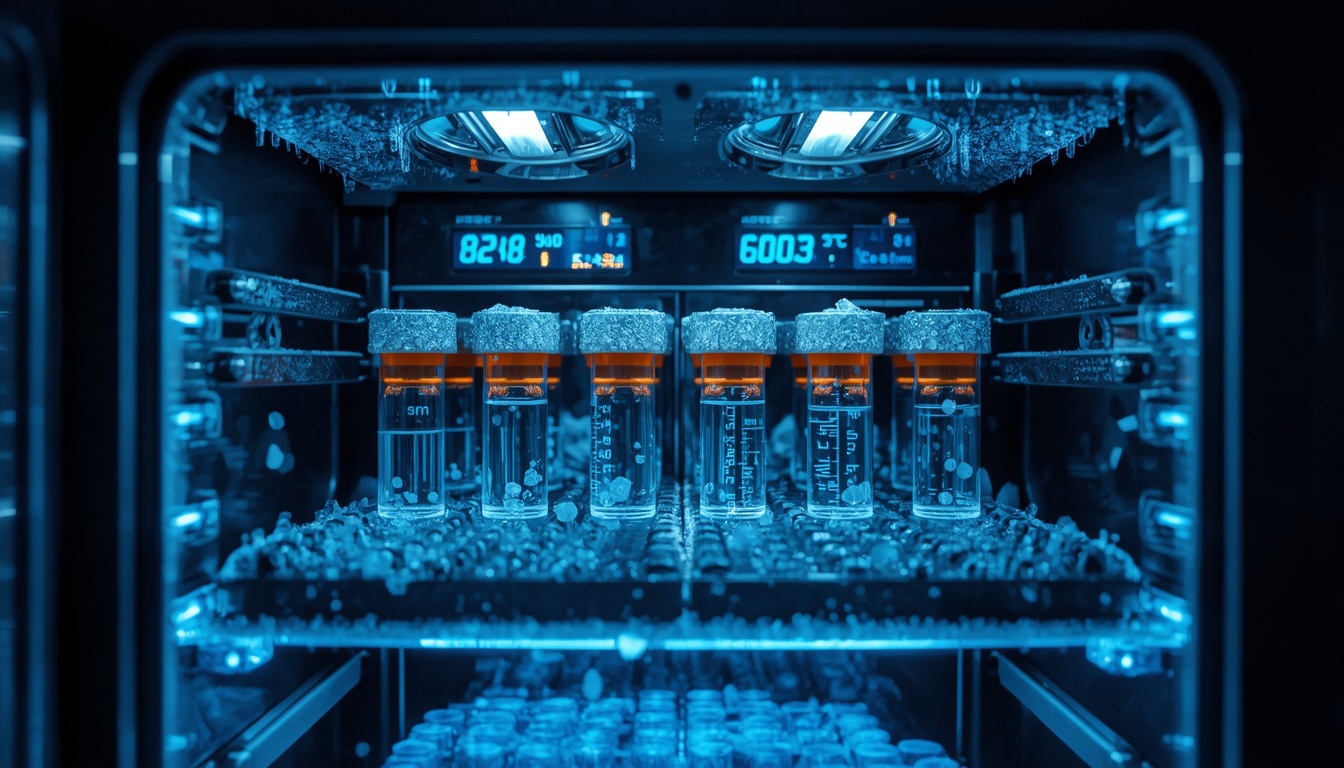
Cold chain failure is responsible for an estimated 25% of vaccine waste globally, over $34 billion in preventable losses annually. From refrigerators at 2-8°C for routine vaccines to ultra-cold storage at -70°C for mRNA COVID vaccines, maintaining an unbroken cold chain from manufacturer to patient is both a clinical imperative and a regulatory requirement. Pharmacy cold chain management software provides continuous monitoring, automated alerting, and complete documentation to protect temperature-sensitive pharmaceutical products.
Temperature Monitoring Technology
Continuous temperature monitoring devices (data loggers, IoT sensors) record temperature at 5-15 minute intervals throughout storage equipment. Pharmacy software integrates with monitoring hardware to display real-time temperature readings, historical trend graphs, and statistical summaries. Wireless or Bluetooth-connected sensors enable remote monitoring, pharmacists receive smartphone alerts when temperatures drift outside acceptable ranges, enabling corrective action before product is compromised.
Temperature Excursion Management
When a temperature excursion is detected (temperature outside acceptable range for any duration), software triggers an immediate multi-channel alert (SMS, email, app notification) to responsible pharmacy staff. The excursion response workflow captures: time and duration of excursion, minimum/maximum temperatures recorded, products in the affected unit at the time, immediate corrective actions taken, and disposition decision (quarantine for stability assessment vs. discard). WHO and manufacturer stability data supports the disposition decision for common vaccines.
Refrigerator and Freezer Management
Pharmacy refrigerators maintaining 2-8°C store: most vaccines (MMR, Hepatitis A/B, influenza, DTaP, HPV, pneumococcal), insulin, reconstituted antibiotics, and temperature-sensitive biologics. Pharmaceutical freezers at -15°C to -25°C store: varicella vaccine, MMRV, and some immunologics. Ultra-cold freezers at -70°C store mRNA COVID vaccines. Software manages calibration schedules, equipment validation records, and preventive maintenance for all storage equipment.
Receiving and Chain of Custody Documentation
Cold chain documentation begins at product receipt. Temperature monitoring devices (data loggers shipped with product) are downloaded at receiving to verify cold chain integrity during transport. Visual inspection of vaccine vial monitors (VVMs) confirms viability. Lot number, expiry date, and storage temperature on manufacturer label are verified against shipment documentation. Rejected shipments with documented chain-of-custody breaks are returned to the supplier with complete evidence.
WHO and CDC Cold Chain Standards
WHO's Expanded Programme on Immunization (EPI) establishes cold chain standards for global immunization programs. CDC guidance governs vaccine storage in US healthcare settings. Both emphasize continuous monitoring, standardized response protocols, staff training, and equipment maintenance as the four pillars of cold chain management. Pharmacy software that automates documentation against these standards simplifies regulatory inspection preparation.
Financial Impact of Cold Chain Failures
A single refrigerator failure affecting a week's vaccine inventory can result in $5,000-$50,000 in product loss plus patient re-vaccination costs. Automated cold chain monitoring systems typically cost $200-500 per monitoring point annually, a fraction of one prevented excursion event. For hospital pharmacies managing expensive biologics ($10,000+ per vial), IoT cold chain monitoring is an unambiguous financial investment.
Ready to optimize your Cold Chain Management Vaccines Biologics workflows? Book a tailored Quecorex demo today.
A Cold Chain Programme in Five Parts
- Equipment. Use refrigerators and freezers suited to the products, not domestic units, with enough capacity that airflow is not blocked.
- Monitoring. Calibrated data loggers or sensors with alarms that reach a person who can act at night and on weekends.
- Procedures. Written steps for receiving, storing, packing for transport, and responding to excursions.
- People. Named responsibilities and trained backups for every shift.
- Records. Continuous temperature history and documented actions, kept for the required period.
Storage ranges depend on the product, so always follow the manufacturer's labelling. Many vaccines and biologics are kept refrigerated at around 2 to 8 degrees Celsius, while some products require frozen or ultra-cold storage.
What to Do in an Excursion
| Step | Action |
|---|---|
| 1 | Secure the affected product and move it to a working unit if safe |
| 2 | Record the temperatures, duration, and products affected |
| 3 | Quarantine stock and label it "do not use" until assessed |
| 4 | Contact the manufacturer or authority for stability guidance |
| 5 | Decide, document, and dispose or release accordingly |
| 6 | Investigate the cause and fix it |
Software helps by linking temperature records to batches, blocking dispensing of quarantined stock, and keeping the audit trail. See the module structure in the pricing estimator, and read pharmacy inventory best practices for related stock controls.
Packing and Transport
Cold chain does not stop at the fridge door. Products move to clinics, wards, outreach sites, and patients' homes, and that is when many excursions happen. Use validated packaging for the expected time and ambient temperature, pack and label consistently, and place a temperature logger in shipments where risk is high. On arrival, check the logger and record acceptance or rejection before stock enters the fridge. Train staff on the fact that leaving a box on a counter for a few minutes can matter, and post simple instructions at packing stations.
Power, Backup, and Emergency Plans
- Backup power. Connect refrigeration to a generator or reliable backup, and test it regularly.
- Alarm coverage. Alarms must reach a person out of hours, by phone or message.
- Emergency transfer plan. Know where stock can go and how it will travel if a unit fails.
- Emergency kit. Cool boxes, coolant packs, loggers, and contact lists stored where staff can find them.
- Post-event review. After any failure, review what worked and update the plan.
Audit Readiness
| Evidence an inspector may ask for | Where it should come from |
|---|---|
| Continuous temperature history for each unit | Logger or monitoring system exports |
| Calibration certificates for sensors | Equipment records |
| Excursion investigations and decisions | Incident log |
| Receiving and dispatch checks | Stock system records |
| Staff training records | HR or training records |
Keeping this evidence in one place saves days at inspection time. Sensors and refrigeration units are equipment too, so see biomedical equipment management for how calibration and maintenance are tracked, and dashboards for alert reporting.
Next Steps
Cold chain integrity is not optional, it is patient safety. Ineffective vaccines, degraded biologics, and compromised medications cause direct patient harm. Quecorex Pharmacy cold chain management provides enterprise-grade monitoring, automated alerting, and complete documentation for pharmacies and hospitals managing temperature-sensitive pharmaceutical inventories worldwide.