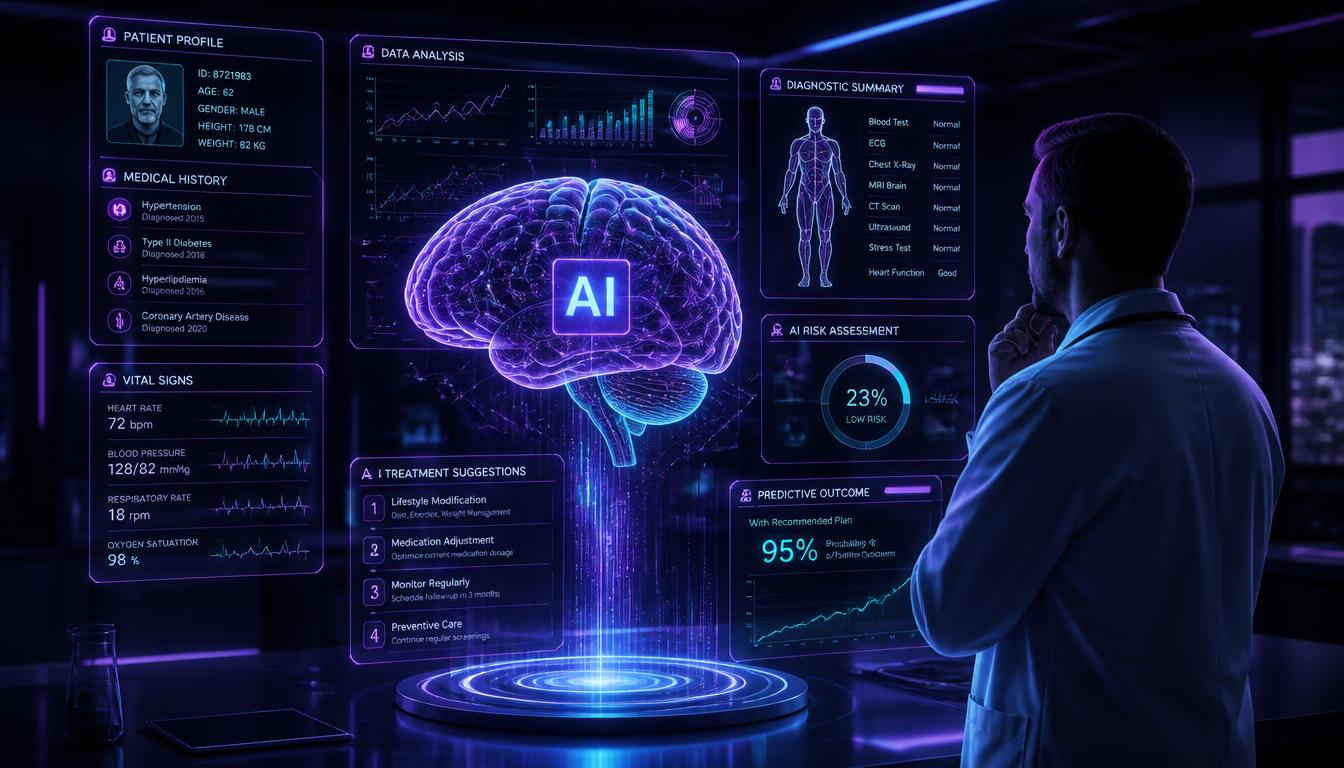
Clinical Decision Support Systems (CDSS) use artificial intelligence and clinical guidelines to assist healthcare providers in making better diagnostic and treatment decisions. These systems analyze patient data in real-time, alert clinicians to potential issues, and suggest evidence-based interventions. When properly implemented, CDSS reduce medical errors by 50%, prevent sepsis deaths, improve medication safety, and drive protocol adherence that saves lives.
The Evolution of Clinical Decision Support
First-generation CDSS used simple if-then rules: alert when potassium exceeds 6.5, alert when penicillin is prescribed to a documented penicillin-allergic patient. These rule-based systems provided real value but generated high false-positive rates causing alert fatigue. Second-generation AI-powered CDSS uses machine learning models trained on millions of patient outcomes to provide probabilistic, context-sensitive recommendations with dramatically lower false-positive rates.
Types of Clinical Decision Support
Medication Safety Alerts
Drug-drug interaction checking, allergy contraindication warnings, renal dosing adjustment recommendations, pregnancy safety category alerts, pediatric dosing calculators, and therapeutic duplication warnings are the foundational medication safety layer in any EMR. Well-calibrated medication safety alerts (specific to the patient's clinical situation rather than generic population warnings) prevent 17% of adverse drug events without overwhelming clinicians with irrelevant notifications.
Sepsis Early Warning
Sepsis kills 270,000 Americans and 11 million people worldwide annually. AI sepsis detection models continuously monitor vital signs, lab values, and clinical documentation to identify sepsis 4-6 hours before obvious clinical deterioration. Systematic Inflammatory Response Syndrome (SIRS) criteria, NEWS2 scores, and qSOFA triggers are augmented by machine learning that detects subtle combinations of findings predictive of sepsis development. Each hour of delayed antibiotic treatment increases mortality by 7%, early AI detection provides the intervention window that saves lives.
Diagnostic Support
Symptom-based diagnostic suggestions help clinicians consider conditions they might otherwise overlook in complex, atypical, or rare presentations. AI differential diagnosis engines analyze chief complaint, history elements, physical exam findings, and preliminary test results to generate probability-ranked differential diagnoses. These tools do not replace clinical judgment, they expand the diagnostic search space to include conditions that might not come immediately to mind under time pressure.
Clinical Protocol Reminders
Evidence-based clinical pathways for sepsis, STEMI, stroke, heart failure, and community-acquired pneumonia have been proven to improve outcomes when followed consistently. CDSS reminds clinicians of protocol steps and time-sensitive interventions during the encounter, ensuring bundle compliance even when multiple complex patients create cognitive overload. Facilities using CDSS for sepsis protocol support reduce mortality by 20-30%.
Order Set Management
Condition-specific order sets pre-populate evidence-based medication choices, diagnostic tests, nursing orders, and monitoring parameters for common presentations. Admission order sets for CHF, pneumonia, and COPD ensure standardized, evidence-based initial management. Procedural order sets for surgical procedures ensure peri-operative antibiotics, DVT prophylaxis, and blood glucose management are ordered consistently.
Alert Fatigue: The Core Challenge
Poorly calibrated CDSS overwhelms clinicians with alerts, studies show physicians receive 50-100 alerts per shift, and override rates for low-specificity alerts reach 90%. When clinicians automatically dismiss all alerts, the clinically important alerts are missed too. Best practices for alert fatigue reduction: apply patient-specific context to all alerts, require clinician reason codes for overrides (improving accountability without blocking workflows), and continuously monitor override rates to identify and retire low-value alerts.
Implementation Success Factors
Successful CDSS implementation requires: physician involvement in alert design (clinicians must trust the alerts), multidisciplinary governance for alert approval, continuous monitoring of alert performance metrics (sensitivity, specificity, override rates), and a process for retiring alerts that no longer add clinical value. CDSS that is designed with clinicians rather than for clinicians achieves adoption and outcomes; CDSS imposed without physician engagement fails regardless of technical sophistication.
AI-Powered CDSS: The Next Generation
Machine learning CDSS learns from outcomes, identifying which patients benefited from specific interventions, which alerts were clinically acted on, and which recommendations improved care. Federated learning enables institutions to train collaborative AI models without sharing patient data across organizational boundaries. Explainable AI (XAI) techniques surface the reasoning behind recommendations, enabling clinicians to evaluate AI logic rather than treating it as a black box.
Global Deployment Considerations
CDSS clinical content requires localization for each market: drug formularies vary by country, clinical guidelines differ between WHO, NICE (UK), AHA/ACC (US), and regional bodies, and reference ranges for lab tests have population-specific norms. A globally-deployed CDSS must maintain country-specific clinical content libraries rather than applying US-centric guidelines to every market.
Ready for a seamless integration? Speak with our implementation team today.
Ready to optimize your Clinical Decision Support Systems Ai Hea workflows? Book a tailored Quecorex demo today.
Conclusion
Clinical decision support at its best is an invisible safety net, catching dangerous medication combinations before they reach patients, alerting clinicians to early sepsis before it becomes irreversible, and ensuring evidence-based protocols are consistently applied across thousands of clinical encounters. Quecorex CDSS integrates 16 AI clinical modules with contextually appropriate alerting tuned to reduce fatigue while maximizing clinical impact across every specialty and deployment geography.