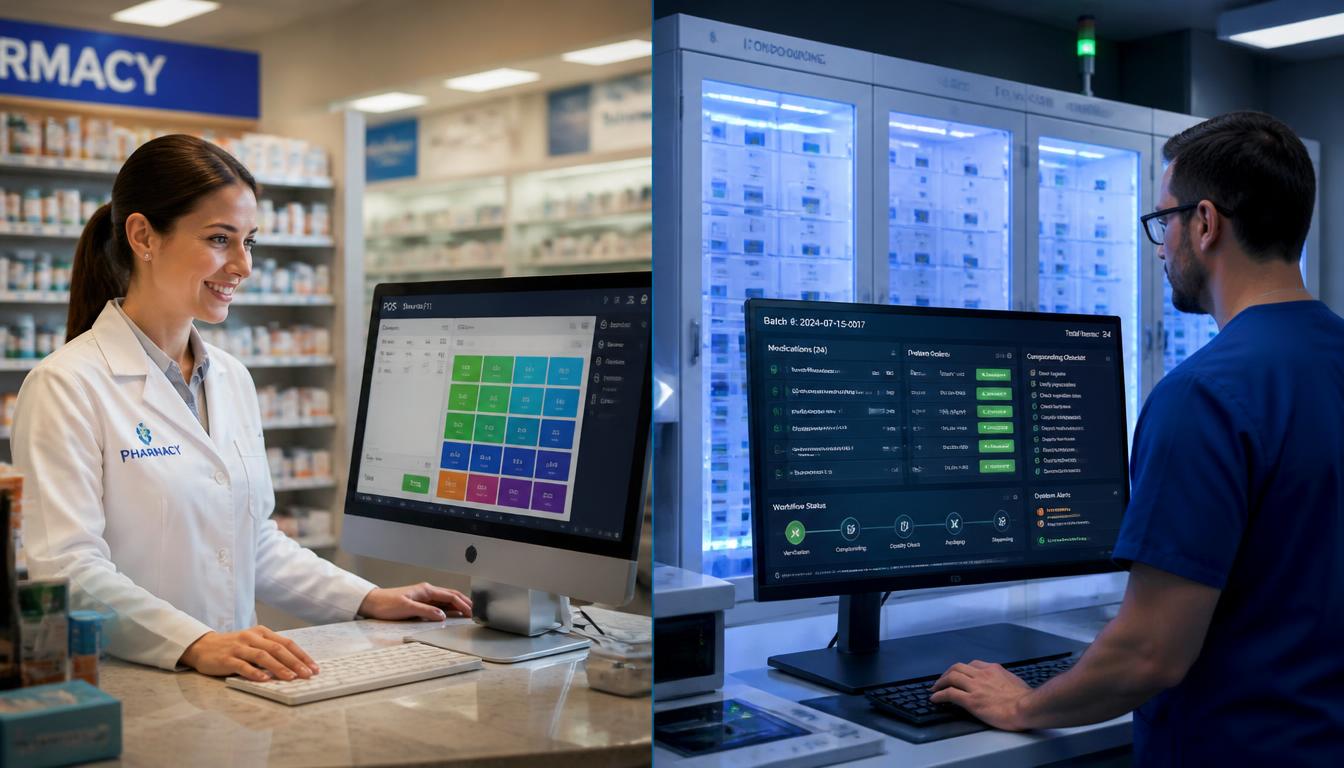
Modern pharmacy operations are far too complex for manual processes. A Pharmacy Management System (PMS) integrates prescription intake, drug dispensing, inventory control, billing, compliance tracking, and customer management into a single intelligent platform. Whether you operate a single retail pharmacy in Lagos or a 50-branch hospital pharmacy network in Toronto, the right PMS is your competitive foundation.
What Is a Pharmacy Management System?
A Pharmacy Management System is software designed to automate and optimize all pharmacy workflows, from receiving a prescription to dispensing medication, managing stock, processing payments, and generating regulatory reports. The global pharmacy software market is valued at over $6 billion and growing at 12% annually, driven by regulatory complexity, rising medication volumes, and the shift to e-prescribing.
Core Features of a Pharmacy Management System
1. Prescription Management
Digital intake of electronic prescriptions directly from EMR/hospital systems eliminates transcription errors. Automated clinical screening checks each prescription for drug-drug interactions, drug-allergy contraindications, duplicate therapy, and renal/hepatic dosing requirements before dispensing. Controlled substance prescriptions (Schedule II-V) are tracked automatically with DEA and PDMP integration.
2. Inventory Management
Real-time stock tracking with min-max reorder alerts prevents stockouts and overstocking simultaneously. Batch and lot number tracking enables rapid product recalls. FEFO (First Expired, First Out) rotation ensures near-expiry medications are dispensed before newer stock. Cold chain management monitors vaccine and biologic refrigeration with automated alerts for temperature excursions.
3. Point of Sale (POS) and Dispensing
High-speed barcode scanning at point of sale, multi-payment processing (cash, card, insurance, mobile money, digital wallets, split payment), and automated receipt/invoice generation. Pricing engines support complex discount structures, promotional discounts, loyalty programs, senior citizen reductions, and insurance co-pay calculations. Sales tax (VAT/GST) compliance is automated by product category and jurisdiction.
4. Compounding and IV Admixture
Sterile compounding workflow management with USP 797 compliance for IV preparations, USP 795 for non-sterile compounding, and USP 800 for hazardous drug handling. Formula management, concentration calculations, IV compatibility checking, and batch labeling with barcodes reduce compounding errors and liability exposure.
5. Delivery and Logistics
Real-time GPS tracking for pharmacy delivery drivers, route optimization, delivery zone management, proof of delivery confirmation, and curbside pickup queue management. Scheduled recurring prescription deliveries for chronic disease patients improve medication adherence and reduce pharmacy workload.
6. Reporting and Analytics
Daily sales reports, inventory turnover analysis, fast/slow-moving item identification, prescription volume by physician and drug class, customer lifetime value analysis, and peak-hour staffing optimization. Regulatory reports for DEA Schedule II-V controlled substances and state pharmacy board compliance are generated automatically.
7. Customer Management
Complete customer profiles with medication history, allergy records, insurance information, and communication preferences. Loyalty programs with point accumulation and redemption. Automated refill reminders via SMS/email reduce medication abandonment by 25%. Patient counseling documentation tracks side effect discussions and medication instructions provided at dispensing.
8. Multi-Branch Management
Centralized inventory visibility across all branches enables stock transfers to prevent stockouts at high-demand locations. Centralized purchasing achieves volume discounts impossible for individual branches. Branch-level performance dashboards compare sales, margins, and inventory metrics in real time.
Hospital Pharmacy vs. Retail Pharmacy Systems
Hospital pharmacies need deep EMR/CPOE integration, ADC (Automated Dispensing Cabinet) interfaces, IV room workflow management, and clinical pharmacist review queues. Retail pharmacies prioritize POS efficiency, customer loyalty, insurance/PBM integration, and delivery logistics. The best pharmacy management platforms serve both use cases from a single unified codebase.
Global Regulatory Compliance
Pharmacy compliance requirements vary significantly by country. In the USA, systems must support DEA Schedule II-V tracking, PDMP reporting, and state board requirements. In the UK, NHS prescription handling and GPhC standards apply. In Kenya, PPB (Pharmacy and Poisons Board) compliance governs controlled substance management. A global PMS must adapt its compliance engine to local regulatory frameworks automatically.
Integration Capabilities
Modern pharmacy systems integrate bidirectionally with hospital EMRs via HL7 FHIR, connect to insurance and PBM networks for real-time eligibility and claims, link to drug information databases (First Databank, Micromedex) for interaction checking, and connect to accounting software (QuickBooks, Tally) for financial reporting.
Need seamless integrations? Speak with our integration specialists about connecting your systems.
ROI of a Pharmacy Management System
Pharmacies implementing full PMS solutions report: 20% reduction in stockouts, 15% decrease in expired medication waste, 30% faster prescription fulfillment times, 95% reduction in billing errors, and 25% improvement in staff productivity. For a mid-size pharmacy processing 200 prescriptions/day, these gains translate to $100,000+ in annual value.
Ready to boost your pharmacy's efficiency? Book a tailored Quecorex PMS demo.
Final Thoughts
A Pharmacy Management System transforms pharmacy operations from a labor-intensive, error-prone process into an efficient, compliant, and customer-centric service. Quecorex Pharmacy covers every workflow from prescription intake to delivery confirmation, serving retail pharmacies, hospital pharmacies, and multi-branch pharmacy chains across 150+ countries.